
March 2026
Authors:
Chuanbin Su, Han-Seul Ryu, Keerthivasan Raanin Chandradoss, Thomas Malachowski, Ravi Boya, Linda Zhou, Hoa Emma Nguyen, Esteban O. Mazzoni, Kristen J. Brennand, Jennifer E. Phillips-Cremins
Abstract:
More than 60 human disorders are caused by unstable expansion of short tandem repeat (STR) tracts. These can exhibit cell-type-specific mosaicism in several repeat expansion disorders and remain difficult to characterize due to technical challenges intrinsic to highly repetitive sequences. Long-read approaches can measure STR length and DNA methylation on the same single molecule but are low-throughput and cost-prohibitive across multiple experimental conditions or patient samples. Here, we present MASTR-seq, multiplexed analysis of short tandem repeats with sequencing, for cost-effective, high-throughput, accurate measurement of STR genotype and DNA methylation at single-allele resolution. MASTR-seq couples long-read sequencing, Cas9-mediated target enrichment, size selection, and PCR-free multiplexed barcoding to increase on-target read proportion for 8–12 pooled samples in a single MinION flow cell. MASTR-seq quantifies tract length and DNA methylation status for CGG, GGGGCC (G4C2), and CAG STR tracts in normal-length and mutation-length samples.
Sage Science Products:
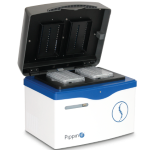
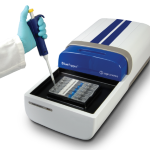
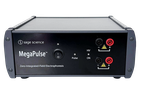
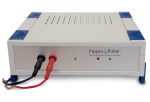
BluePippin automated size selection for removal of uncleaved and off-target DNA fragments.
Methods Excerpt:
“Removal of background uncleaved genomic DNA or off-target DNA fragments outside of the target locus is essential for MASTR-seq performance. We use BluePippin size selection to further enrich the target signal in our protocol. Cas9 RNP cleavage of the target (e.g., here, the FMR1 locus) produces a 6.9-kb-sized DNA fragment in normal-length (NL) iPSCs or an 8- to 10-kb-sized DNA fragment in ML iPSCs. For potentially longer ML STR tracts (e.g., GGGGCC/G4C2 in ALS-patient-derived iPSCs), Cas9 RNP cleavage of the target C9ORF72 locus produces a 4.2 kb size DNA fragment in NL alleles. To ensure the BluePippin size selection recovers the wide range of DNA fragments efficiently, we conduct size selection for large 4–15 kb fragments using the BluePippin (Sage Science) and BLF7510 cassette using the “0.75DF 3–10 kb Marker S1-Improved Recovery” cassette definition with broad range mode set at 4–15 kb.”
Author Affiliations:
Epigenetics Institute, Perelman School of Medicine, University of Pennsylvania, Philadelphia, PA, USA
Department of Genetics, Perelman School of Medicine, University of Pennsylvania, Philadelphia, PA, USA
Department of Bioengineering, University of Pennsylvania, Philadelphia, PA, USA
Department of Genetics, Washington University School of Medicine, St. Louis, MO, USA
Department of Neuroscience, Washington University School of Medicine, St. Louis, MO, USA
Department of Biology, New York University, New York, NY, USA
Neuroscience Institute, Department of Neuroscience and Physiology, New York University School of Medicine, New York, NY, USA
Nash Family Department of Neuroscience, Icahn School of Medicine at Mount Sinai, New York, NY, USA
Department of Genetics and Genomics, Icahn School of Medicine at Mount Sinai, New York, NY, USA
Friedman Brain Institute, Black Family Stem Cell Institute, Pamela Sklar Division of Psychiatric Genomics, Icahn School of Medicine at Mount Sinai, New York, NY, USA
Department of Psychiatry, Yale School of Medicine, New Haven, CT, USA
Cell Reports Methods
DOI: 10.1016/j.crmeth.2026.101341