
July 2025
Authors:
Eymen Demir, Bahar Argun Karsli, Demir Özdemir, Umit Bilginer, Huriye Doğru, Sarp Kaya, Veli Atmaca, Nimet Tufan, Ebru Demir, Taki Karsli
Abstract:
Next-generation sequencing (NGS) technologies have revolutionized livestock genomics by enabling rapid, high-resolution genotyping of local populations with thousands of single nucleotide polymorphisms (SNPs), offering unprecedented accuracy and cost efficiency. This study presents the first comprehensive genomic assessment of the Denizli (DNZ) and Gerze (GRZ) chicken breeds, comparing them to commercial broiler and layer hybrid lines using the double digest restriction-site associated DNA sequencing (ddRADseq) technique. A total of 94,208 bi-allelic SNPs were common between DNZ and GRZ, while 33,284 SNPs were retained among all populations after the quality filtering process. Genetic diversity parameters were higher in native Turkish chicken breeds compared to hybrid lines in which minor allele frequency (MAF) was higher than 0.3 in DNZ and GRZ while it was lower than this value in commercial hybrid lines. Notably, DNZ displayed the highest observed (0.386) and expected (0.375) heterozygosity, whereas the broiler hybrid line showed the lowest heterozygosity (0.254), suggesting inbreeding depression (FIS = 0.241). The negative inbreeding coefficient values occurring due to random mating were observed in DNZ and GRZ chicken breeds, while this value was estimated at 0.118 in the layer hybrid line. Population structure analyses such as principal component analyses (PCA), genetic distance-based neighbor-joining (NJ) tree, ADMIXTURE, and TreeMix algorithm revealed that DNZ and GRZ were genetically distinct from both each other and commercial hybrid lines. The results of this study confirm that comprehensive conservation strategies are efficient approaches to keeping genetic variability at an optimal level without inbreeding. Moreover, this study demonstrates the efficacy of ddRADseq in generating high-throughput genotypic data, providing a cost-effective framework for genomic diversity and population structure studies in indigenous chicken breeds.
Sage Science Products:
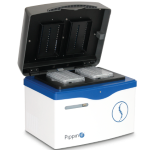
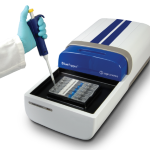
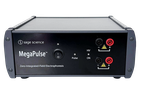
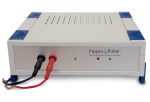
Pippin Prep size selection used for ddRADseq libraries
Methods Excerpt:
“After the ligation step, barcoded samples belonging to each sub-library were pooled in a single tube and cleaned with microbeads. For size selection, 30 µl (3000 ng DNA) from each sublibrary + 10 µl loading dye were loaded into each sample well of the 2 % agarose gel cassette. The size selection step was performed in the Pippin prep (Sage Science) instrument with a fragment range of 300-500 bp. After running for 79 min, size-selected sub-library samples were obtained in the elution modules of the cassettes. After the pippin prep step, PCR was performed to enrich each sublibrary and to attach 5 indexes suitable for the Illumina platform to each sublibrary. In this study, we pooled 120 samples into 3 different genomic libraries (each containing 40 samples) to increase depth coverage in the sequencing process. The enriched and cleaned DNA libraries were sequenced by the Illumina NovaSeq 6000 platform to obtain raw paired-end reads (2 × 150 bp)”
Author Affiliations:
Department of Animal Science, Faculty of Agriculture, Akdeniz University, Antalya, Republic of Türkiye
Department of Agricultural Biotechnology, Faculty of Agriculture, Eskişehir Osmangazi University
Department of Agricultural Biotechnology, Faculty of Agriculture, Akdeniz University, Republic of Türkiye
Department of Animal Science, Michigan State University
Department of Medical Services and Techniques, Vocational School of Burdur Health Services, Burdur Mehmet Akif Ersoy University, Republic of Türkiye
Department of Animal Science, Faculty of Agriculture, Eskişehir Osmangazi University
Science Direct
DOI: 10.1016/j.psj.2025.105193