
May 2025
Authors:
Daan M Hazelaar, Ruben G Boers, Joachim B Boers, Vanja de Weerd, Jean Helmijr, Maurice PHM Jansen, Henk MW Verheul, Cornelis Verhoef, Joost Gribnau, John WM Martens, Stavros Makrodimtris, Saskia M Wilting
Abstract:
Cell-free DNA (cfDNA) analysis offers a powerful, minimally invasive approach to improve cancer care by measuring tumor-specific genomic and epigenetic alterations. Here, we demonstrate the versatility of MeD-seq, a methylation-dependent sequencing assay, for comprehensive cfDNA analysis, including DNA methylation profiling, chromosomal copy number (CN) alterations, and tumor frac on (TF) estimation. MeD-seq-derived CN profiles and TF estimates from 38 colorectal cancer with liver metastases (CRLM) and 5 ovarian cancer pa ents were highly comparable to shallow whole-genome sequencing (sWGS) validating our approach. For 120 CRLM pa ents we used MeD-seq CN and TF information in an improved Differential Methylation Model which detected additional significantly Differentially Methylated Regions (DMRs) correlating with TF estimates. Using the identified DMR sets we were subsequently able to distinguish healthy blood donors from CRLM patients with low amounts of circulating tumor DNA (ctDNA) as well. These findings show MeD-seq as an affordable platform for detecrting cancer-specific signals directly from plasma without prior tissue-based information. Future work could expand its application to other cancer types, solidifying MeD-seq as a versa le tool for cfDNA profiling.
Sage Science Products:
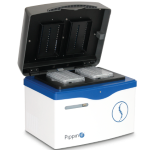
PippinHT was used for isolating MED-seq libraries.
Methods Excerpt:
“Samples were prepared for sequencing using the ThruPLEX DNA-seq 96D kit and the ThruPLEX DNA-Seq HV kit (Rubicon Genomics, Takara Bio Europe), for CRLM and ovarian cancer samples respectively, and purified on a Pippin HT system with 3% agarose gel cassettes (Sage Science, Beverly, MA) enriching for fragments ranging from 148 to 192bp (including sequencing adapters), which was shown to enrich for tumor-derived DNA fragments (Mouliere et al., 2018)..”
Author Affiliations:
Department of Medical Oncology, Erasmus MC Cancer Institute, University Hospital Rotterdam, The Netherlands
Department of Developmental Biology, Rotterdam, the Netherlands.
Department of Oncological and Gastrointestinal Surgery, Erasmus MC Cancer Institute, University Hospital Rotterdam, The Netherlands.
BioRxiv preprint
DOI: 10.1101/2025.01.21.633371