
Cross-Platform Sequencing Studies in the Spotlight at ABRF
It’s day two of the ABRF meeting, and a session comparing next-gen sequencing platforms had attendees riveted. The room was packed for “ABRF Next Generation Sequencing Study,” which featured speakers including George Grills, Don Baldwin, Scott Tighe, Christopher Mason, and Marc Salit.
Members of this team helped lead the cross-platform RNA-seq study, which is expected to publish soon in Nature Biotechnology. Chris Mason presented findings from this study, including reassurance that degraded RNA works just fine (phew!) and underscoring the conventional wisdom that while it is possible to compare RNA-seq studies from different sequencing platforms, it is not wise to do so. The study, which used most commercially available sequencers, was not intended as a bake-off between instruments but rather as a way to establish the best practices for running each platform and determining the advantages and disadvantages of each.
Don Baldwin spoke about the next cross-platform study, which will focus on DNA sequencing. (The team started with RNA-seq because there were readily available external RNA standards, thanks to the External RNA Control Consortium spearheaded by the National Institute for Standards and Technology.) The effort will be formalized in June, so there’s still time for interested core labs to participate. The study is expected to progress in three phases, with the first comparing the Illumina, Ion Torrent, and PacBio platforms looking at whole-genome sequencing. The second phase will incorporate FFPE samples, and the third phase will deploy broadly available plus emerging sequencing platforms for small genomes.
NIST’s Marc Salit was on hand to talk about the DNA controls to be used in this upcoming study, for which ABRF has partnered with Salit’s Genome in a Bottle consortium. Salit said that existing consortium materials have been developed with the NA12878 human genome, but long-term work will use eight trios from the Personal Genome Project.
These studies are precisely the kind of high-quality, devil-in-the-detail work for which we look to ABRF. The participating core labs offer tremendous attention to detail, highly robust and reproducible results, and clear protocol guidelines — invaluable attributes that make experiments more reliable across the whole scientific community. ABRF, many thanks for this diligent work!
Live from Albuquerque, It’s Protein Day at ABRF!
The annual ABRF meeting kicked off today, and some of the earliest talks focused on proteomics. The Sage team was glad about that, as our newest product, the SageELF, works with proteins as well as DNA.
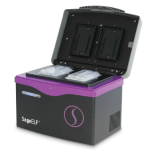
The conference’s opening keynote came from Albert Heck, director of the Netherlands Proteomics Center and of the Bijvoet Center for Biomolecular Research at Utrecht University. The presentation offered a fascinating view of protein analysis, integrated ’omics data sets, and the need for more enzymes in measurement studies. Heck also spoke about protein separation technologies, which is where our SageELF fits in. It’s designed to perform whole-sample fractionation, making sure every bit of protein gets scooped up for your experiment. We have the instrument in our booth, so if you’re here at ABRF please stop by to check it out.
Another talk came from proteomics pioneer Leigh Anderson, CEO of SISCAPA Assay Technologies. His talk covered high-throughput quantification of biomarkers, noting that mass spec offers better specificity than immunoassays do. Anderson said that the SISCAPA technology can be used to target protein biomarkers with more sensitivity than other methods, allowing it to see important changes that may be missed in as many as 40 percent of patients with other tools.
In other sessions today, the DNA Sequencing Research Group presented results of its global reproducibility survey, finding that quantitative methods are more consistent than qualitative ones. We were also glad to see presentations on next-gen sequencing for clinical applications; ABRF has made a real push to the clinical realm in recent years and it’s great to get this kind of information here.
Thanks to the speakers and organizers for an excellent kick-off to the conference. We look forward to more in the days to come!
As ABRF Approaches, Sage Science Honors Core Lab Customers
With the annual ABRF conference rapidly approaching, we wanted to take a moment to thank the many core lab teams who have adopted Pippin instruments for automated DNA size selection. Some of these customers have independently conducted studies of size selection methods and have demonstrated that Pippin outperforms other options for precision and reproducibility of sizing.
We have profiled the work of several of our core lab customers. If you haven’t read about them, check these out now for great tips on how and when to use size selection for optimal results. These customers use Pippin with every commercially available next-gen sequencing platform, and for applications ranging from splice variant analysis and ChIP-seq to microRNA isolation and de novo genome assembly.
Core lab: GenCore at New York University’s Center for Genomics and Systems Biology
Manager: Paul Scheid
Key applications: DNA sequencing, tracking structural variants, and ddRAD-seq population genetics projects
Core lab: Molecular Biology Core Facilities at the Dana-Farber Cancer Institute
Associate director: Zach Herbert
Key application: Pairing Pippin Prep with Illumina’s Nextera sample prep for small genome studies and for some larger amplicon projects
Core lab: DNA Facility at the University of Iowa
Director: Kevin Knudtson
Key application: Isolating microRNAs
Core lab: Norwegian High-Throughput Sequencing Centre, the University of Oslo
Daily Leader: Lex Nederbragt
Key application: Extending PacBio® sequencer read lengths
Core lab: DNA Technologies Laboratory, National Research Council of Canada
Group Leader: Andrew Sharpe
Key application: Creating multiple libraries with different insert sizes to boost accuracy of the genome assembly
Core lab: BioMicro Center at MIT
Director: Stuart Levine
Key applications: Splice variant analysis with RNA-seq and microRNA analysis
Core lab: Genomics Resource Core, Institute for Genome Sciences at the University of Maryland
Laboratory manager: Naomi Sengamalay
Key application: Extending read lengths from the PacBio® sequencer
All Aboard for ABRF!
The Sage Science team is gearing up for our favorite core facility meeting: the annual conference of the Association of Biomolecular Resource Facilities. This year the event will be held in sunny Albuquerque, New Mexico, home of the largest hot air balloon festival in the world.
The ABRF meeting brings together scientists from core labs around the world who excel at honing protocols, establishing recommended guidelines, and tweaking technology platforms to get the very best results. As scientists who focus on optimizing electrophoresis-based methods for sample prep, we always feel right at home with the ABRF community.
We’re especially looking forward to the reporting sessions from the ABRF research groups focused on DNA sequencing and proteomics. Each year, these research groups offer terrific insight into factors like inter-lab variability, success rates with sample quality and origin, and best applications for different analysis platforms. There will also be a session on the next-generation sequencing study, in which ABRF members will be putting sequencing platforms through their paces to see how best to use each.
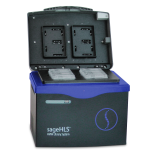
Also, we will be showing off our newest instrument at the conference. Stop by booth #502, right near the exhibit hall entrance, to check out the SageELF, our new whole-sample fractionation system for DNA and proteins.
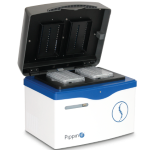
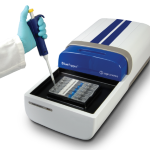
We’ll also have plenty of information about our established Pippin DNA size selection platforms, which can be used with any next-gen sequencer. For a great example of how our BluePippin tool is being used to generate longer reads from the PacBio® sequencer, don’t miss poster #44 from scientists at the University of Maryland and Pacific Biosciences.
From the Land of Sun to the Land that Sun Forgot
It was with great reluctance that the Sage Science team boarded planes taking us back to snowy Boston after a sunny and productive AGBT meeting in Florida.
One of the key messages of this year’s Marco Island conference was that the actual sequencing technology is no longer the main focus for needed improvement. Sure, established sequencing vendors will continue to tweak their platforms, and upstarts eager to join the space will continue to innovate with new ways to read off those As, Cs, Gs, and Ts. But speaker after speaker noted that with sequencing itself working so well, the doors are now open for real advances in sample preparation — especially for ways to make it more robust, reproducible, and cost-effective.
Here at Sage, we have long been motivated by that challenge. We believe that automated sample prep solutions will trump manual steps, which introduce run-to-run variability, allow for cross-contamination, and increase cost. Our Pippin products have already been proven by independent studies to be more reliable than manual gel extraction for DNA sizing, and we look forward to seeing our new SageELF whole-sample fractionation system gain traction as well.
We are grateful to so many people for a terrific AGBT. Thanks to the conference organizers and scientific committee for pulling together top-notch talks and thought-provoking posters. We appreciate all of the attendees who took time to stop by our suite and learn more about our new SageELF or see the prototype for our high-throughput Pippin instrument. And we thank the sponsoring companies who hosted great social events that kept us up and networking into the wee hours. Now it’s time to put our dancing shoes away and get back to building better sample prep solutions!