
At AGBT, a Big Day for Blue!
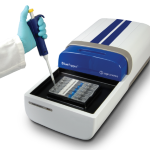
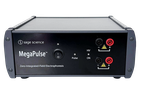
Our BluePippin instrument got a little celebrity treatment at AGBT today. Several PacBio users who spoke during the plenary and evening sessions noted that BluePippin is an essential part of their SMRT Sequencing pipeline.
We were especially flattered to get attention during a talk from Dick McCombie of Cold Spring Harbor Laboratory. He presented genome sequencing projects for rice and two strains of yeast, all of which were completed using BluePippin size selection to remove low molecular weight content. Read length from sizing and PacBio sequencing was so long, McCombie said, that in the yeast projects it really was only limited by chromosome length. Preparing 7 Kb libraries with BluePippin enabled the team to focus assembly efforts on reads of 10 Kb and longer, which still generated abundant coverage and led to single-contig chromosomes in many cases.
Later in the day, David Wheeler from the Human Genome Sequencing Center at Baylor College of Medicine reported that his team uses BluePippin size selection with PacBio long reads to help select high molecular weight content — a particularly important feature for the structural rearrangements he is looking to find. Not long afterward, Sean McGrath from the Genome Institute at Washington University noted in his presentation on using SMRT Sequencing for isoform characterization that size fractionation with BluePippin or the SageELF would be an important future direction for his own work.
If you haven’t stopped by our suite yet, please say hello. We’re in lanai #281 and would love to tell you more about why BluePippin is getting all these great shout-outs from the podium!
As Sequencing Techs Mature, Scientists Look to Sample Prep for Improvements
We come to AGBT year after year because it is the place for new advances in DNA sequencing. But this year we’re hearing more and more about a cause that has special importance to us: sample prep.
In the first few talks of the conference, speakers presenting on single-cell studies and on precision cancer diagnostics both cited sample prep as a major challenge for reaching their experimental goals. With single cells, for example, the Broad Institute’s Aviv Regev noted that deeper sequencing is less important than high-quality sample prep to get great data. In cancer research, getting patient biopsy samples with enough quality DNA is a widely recognized problem that many scientists and surgeons are working to address.
That theme continued on the second day of the conference, with many calls from the podium for more robust sample preparation methods for everything from low-input approaches to preserving long fragments of undamaged DNA. We also noticed a growing trend among conference talks for studies that integrate many layers of information — DNA sequence, RNA-seq, epigenetics, ChIP-seq, and so forth. Scientists are eager to combine all of this data to make deeper insights into biological mechanisms, but using so many different approaches puts even more pressure on the sample prep process to be reproducible and precise across all workflows.
That’s the mandate of our company, so this focus on sample prep is music to our ears. We’ve had fun at AGBT showing off our new SageELF and offering sneak peeks of other products in the works, all of which share the same goal: increasing the quality and decreasing the variability in the preparative process. If you haven’t stopped by yet, you can find us in lanai #281.
At Mount Sinai, Precise Sizing and SMRT Sequencing Yield Unprecedented Read Length
At the Icahn Institute for Genomics and Multiscale Biology at Mount Sinai in New York City, scientists use automated DNA sizing together with long-read sequencing to analyze clinical samples, conduct routine surveillance on microbes, and more.
Technology development expert Robert Sebra, Ph.D., relies on Single Molecule, Real-Time (SMRT®) Sequencing from Pacific Biosciences with BluePippin™ automated DNA size selection from Sage Science. Together, these tools offer a powerful solution and industry-leading read lengths that allow Sebra and other researchers to resolve repeat elements and structural variants, rapidly close microbial genomes, and measure epigenetic marks.
Sebra, an assistant professor of genetic and genomic sciences, is no stranger to the SMRT Sequencing platform: he spent five years working at PacBio helping to develop that technology. Ultimately, his belief in the system led him to join the Icahn Institute, where he would get to use the PacBio® sequencer in the field. “There was a lot to be gained by taking the technology and applying it in a clinical setting,” says Sebra, who came to Mount Sinai in 2012. “I had experienced firsthand the value of long-read sequencing and wanted to apply it to human and infectious disease research.”
Since its founding by Eric Schadt in 2011, the Icahn Institute has attracted some 150 leading scientists and clinicians who bring a network-based approach to various biological questions, many of them focused on cancer, Alzheimer’s disease, allergy and asthma, and infectious disease. Among the institute’s well-stocked core facilities are two PacBio RS II sequencers and a BluePippin instrument, which are used together for projects requiring extra-long reads.
The PacBio RS II is his go-to system for epigenetic profiling, finishing microbial genomes, and exploring DNA samples likely to have repeats, large structural rearrangements, or ones that require allelic or accessory genome phasing.
As he applies long-read sequencing to these projects, Sebra continually looks for ways to generate the longest possible reads. One complementary technology for the PacBio workflow is BluePippin, an automated DNA size selection platform from Sage Science. Removing smaller fragments from the sequencing library ensures that the PacBio platform focuses on the longest fragments, so accurate sizing can improve average read length considerably. “You could do a traditional pulsed field gel every time you’re trying to size select, but it takes too much time, doesn’t scale well, and the DNA input requirement is really high,” Sebra says. “BluePippin is fast and cheap, and it’s the only option for size selecting in a high-throughput fashion. We purchased one as soon as it was available.”
Since bringing in BluePippin in 2012, Sebra’s team has run more than 100 libraries using the BluePippin+PacBio combo — in fact, he says, “For projects requiring near finished genome assembly, I don’t think we’ve prepared a library without BluePippin size select since owning the instrument.” He has been pleased with the amount of size-selected library the technology yields, noting that in virtually every experiment it produces more than enough to sequence a genome to completion on the PacBio RS II. He generally excludes all fragments smaller than 10 Kb to target the ultra long fragments, but says that in cases where input DNA is especially low or the genome is quite large and requires more library, he lowers that threshold to 7 Kb.
Sebra notes that the size selection step has exceeded his expectations for overall improvement in read length and throughput of SMRT Sequencing. The boost to mean read length from adding BluePippin size selection ranges from about 30 percent to 125 percent, depending on the input quality, he says.
In one infectious disease study, the team sequenced multiple MRSA isolates using PacBio with and without BluePippin sizing, finding that prior to sizing, 50 percent of the bases are in reads 5 Kb or longer, while after sizing that number more than doubled to 12.5 Kb.
“If your throughput of [PacBio] runs is high enough, a BluePippin is really pretty affordable,” Sebra says. “Size selection reduces the number of SMRT Cells required to achieve a particular sequencing goal, so it pays for itself pretty quickly.”
For more about Sebra’s scientific and clinical efforts, check out the full case study here.
If We Close Our Eyes, We Can Almost Hear the Sound of Surf
This winter has been especially brutal at Sage headquarters in Massachusetts — it is possible that we have never anticipated the Marco Island conference with quite this level of enthusiasm!
Next week we and hundreds of other scientists will flock to Marco Island, Fla., for the 15th annual Advances in Genome Biology and Technology conference. A quick look at the agenda promises that this year’s lineup won’t disappoint for big-name speakers, new technology details, and a continued push for demonstrations of clinical utility.
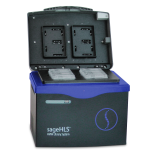
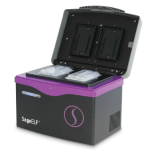
Aside from our big escape from subzero weather, we at Sage are excited about the meeting because it will be our opportunity to introduce new products of our own. The SageELF, short for Electrophoretic Lateral Fractionator, is the first whole-sample DNA fractionation system to hit the market. We think it has great applications for detecting splice variants, building libraries with multiple insert sizes for more accurate genome assemblies, and preserving precious samples. (It works with proteins as well.) We’ll also have a prototype of the high-throughput version of our Pippin automated DNA size selection system on display. Based on how many customers have been asking us for this, we can’t wait to show it off.
Feel free to stop by our suite — Lanai #281 — to check out the new products, learn more about how accurate DNA sizing can improve the quality of your experiments, or just pick up some of our cool swag. (Hint: there’s chocolate involved.)
We look forward to seeing you in sunny Florida!
At NYU’s Center for Genomics and Systems Biology, Pippin Allows for More Precise DNA Size Selection
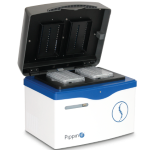
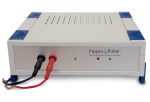
At NYU’s Center for Genomics and Systems Biology (CGSB), the genomics sequencing core facility (GenCore) runs both infectious disease and model organism sequencing projects through its Illumina and Ion Torrent pipelines. In both workflows, they find Pippin Prep to be a handy tool for automated DNA sizing.
GenCore Manager Paul Scheid sees many different types of research projects come through the facility’s doors: de novo sequencing and double digest RAD-seq are two of the most common. GenCore clients are often studying the genetics and genomics of populations, not just an individual organism.
For both applications, Scheid says that Pippin automated sizing has been helpful to the lab, which has the HiSeq 2500, MiSeq, and PGM. The team uses Pippin for constructing regular libraries for de novo assembly, and also for tracking specific structural variants. “If we’re interested in eking out a specific indel and we want to be assured that that indel cannot possibly be created by a contiguous fragment in the population of fragments that go into library preparation, we can use Pippin to define a very narrow fragment range,” Scheid says.
The GenCore team also handles quite a bit of ddRAD-seq, a technique developed by the Hoekstra lab at Harvard. “We have a group that does a lot of ddRAD sequencing to isolate variants across the genome of their particular species of interest,” Scheid says. “We use the Pippin when constructing those ddRAD libraries to control the amount of loci that we hit from a given library. It’s very nice for fine-tuning that parameter.”
Automated size selection also works nicely with sequencing projects run on the PGM, “which is very sensitive to fragment sizes because of the emulsion PCR,” Scheid says. “So we use Pippin to make sure the libraries are in the exact range we want.”
Before getting the Pippin about a year ago, GenCore had several other methods for size selection. NYU CGSB decided to invest in the tool because it could accomplish things that the other methods couldn’t. “I just don’t think that there are any other platforms out there that allow the level of granularity that Pippin does in terms of size selection,” Scheid says.