

Assembly and diploid architecture of an individual human genome via single-molecule technologies
June 2015
Authors:
Matthew Pendleton, Robert Sebra, Andy Wing Chun Pang, Ajay Ummat, Oscar Franzen, Tobias Rausch, Adrian M Stütz, William Stedman, Thomas Anantharaman, Alex Hastie, Heng Dai, Markus Hsi-Yang Fritz, Han Cao, Ariella Cohain, Gintaras Deikus, Russell E Durrett, Scott C Blanchard, Roger Altman, Chen-Shan Chin, Yan Guo, Ellen E Paxinos, Jan O Korbel, Robert B Darnell, W Richard McCombie, Pui-Yan Kwok, Christopher E Mason, Eric E Schadt & Ali Bashir
Info:
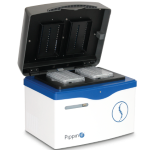
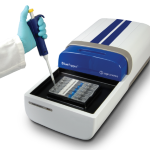
Scientists report “the first comprehensive analysis of a diploid human genome” generated by long-read sequencing and single-molecule genome maps. The resulting hybrid assembly dramatically increased contiguity, with scaffold N50s nearly 30 Mb. BluePippin was used to remove DNA fragments shorter than 7 Kb prior to PacBio sequencing.
Citation:
Nature Methods.
DOI:10.1038/nmeth.3454
Limitations of Climatic Data for Inferring Species Boundaries: Insights from Speckled Rattlesnakes
June 2015
Authors:
Jesse M. Meik, Jeffrey W. Streicher, A. Michelle Lawing, Oscar Flores-Villela, and Matthew K. Fujita
Info:
In this paper, scientists in Texas and Mexico challenge conventional climate-based species boundaries in the speckled rattlesnake, using genomic and other data to support their recommendation that three current subspecies should be recognized as independent species. They used ddRAD-seq with BluePippin size selection to provide genotyping data for the snakes.
Citation:
PLoS ONE 10(6): e0131435.
doi:10.1371/journal.pone.0131435
Fecal virome analysis of three carnivores reveals a novel nodavirus and multiple gemycircularviruses
May 2015
Authors:
Nádia Conceição-Neto, Mark Zeller, Elisabeth Heylen, Hanne Lefrère, João Rodrigo Mesquita and Jelle Matthijnssens
Info:
This publication in Virology Journal describes metagenomics analyses of fecal samples from badger, mongoose, and otter to better understand viral populations in healthy carnivores. Scientists used BluePippin for library size selection and sequenced with an Illumina HiSeq.
Citation:
Virology Journal 2015, 12:79
doi:10.1186/s12985-015-0305-5
Optimization and cost-saving in tagmentation-based mate-pair library preparation and sequencing
May 2015
Authors:
Kaori Tatsumi, Osamu Nishimura, Kazu Itomi, Chiharu Tanegashima, and Shigehiro Kuraku
Info:
Scientists from RIKEN modified the recommended protocol for the Nextera Mate Pair Sample Prep Kit from Illumina to improve library yield and quality while minimizing cost. Changes included optimizing tagmentation conditions, intensive shearing of DNA, and more. The team also switched the order of size selection, using BluePippin before the strand displacement reaction, which saves money by reducing reagent volumes.
Citation:
BioTechniques 58:253-257 (May 2015)
doi 10.2144/000114288
Sequence data for Clostridium autoethanogenum using three generations of sequencing technologies
April 2015
Authors:
Sagar M Utturkar, Dawn M Klingeman, José M Bruno-Barcena, Mari S Chinn, Amy M Grunden, Michael Köpke & Steven D Brown
Info:
Researchers from the University of Tennessee, North Carolina State University, and other organizations present data from four different sequencing platforms to elucidate the microbe and to provide a community resource for platform comparisons. PacBio libraries were size-selected with BluePippin.
Citation:
Scientific Data
doi:10.1038/sdata.2015.14