
Whole Genome Amplification and Reduced-Representation Genome Sequencing of Schistosoma japonicum Miracidia
January 2017
Authors:
Jonathan A. Shortt, Daren C. Card, Drew R. Schield, Yang Liu, Bo Zhong, Todd A. Castoe, Elizabeth J. Carlton, and David D. Pollock
Info:
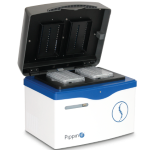
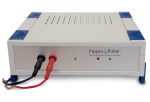
Researchers used ddRAD-seq to study the schistosome species S. japonicum miracidia, finding that they could analyze up to 30,000 loci from archived samples. The approach offers significantly more information than microsatellite genotyping and is cost-effective. They used Pippin Prep to size-select libraries prior to sequencing on an Illumina MiSeq instrument.
Citation:
PLoS Neglected Tropical Diseases
MicroRNA biomarkers of pancreatic injury in a canine model
January 2017
Authors:
Rodney Rouse, Barry Rosenzweig, Katie Shea, Alan Knapton, Sharron Stewart, Lin Xu, Ashok Chockalingam, Leah Zadrozny, and Karol Thompson
Info:
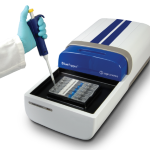
FDA scientists report results of studying five pancreas-enriched microRNAs as potential biomarkers for pancreatic injury. They used droplet digital PCR to measure miRNAs in serum, and size-selected libraries with the PippinHT platform.
Citation:
Experimental and Toxicologic Pathology
Volume 69, Issue 1, January 2017, Pages 33–43
QseC inhibition as an antivirulence approach for colitis-associated bacteria
January 2017
Authors:
Michelle G. Rooks, Patrick Veiga, Analise Z. Reeves, Sydney Lavoie, et al.
Info:
In this paper, scientists from Harvard and other institutions describe a study of quorum-sensing regulators in E. coli as a possible means of reducing intestinal inflammation in models of inflammatory bowel disease. They found that inactivating these regulators reduced virulence of a particular E. coli strain. As part of the project, the team used Pippin Prep to size-select pooled amplicons prior to sequencing on the Illumina MiSeq platform.
Citation:
PNAS January 3, 2017 vol. 114 no. 1 142-147
doi:10.1073/pnas.1612836114
Targeted capture and sequencing of gene-sized DNA molecules
December 2016
Authors:
Michael Giolai, Pirita Paajanen, Walter Verweij, Lawrence Percival-Alwyn, et al.
Info:
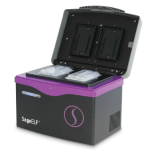
Scientists adapted the RenSeq capture method for long-read PacBio sequencing, optimizing the method through improved shearing, size selection, and PCR amplification. They used SageELF extensively to remove small fragments from libraries so the sequencer would generate the longest reads possible.
Citation:
BioTechniques 61:315-322
doi 10.2144/000114484
Defining an olfactory receptor function in airway smooth muscle cells
December 2016
Authors:
William H. Aisenberg, Jessie Huang, Wanqu Zhu, Premraj Rajkumar, et al.
Info:
Scientists at Johns Hopkins University, Rutgers, and other institutions teamed up to study receptors in airway smooth muscle cells that appear to play a role in asthma. Results demonstrated that these particular odorant receptors may be a novel target for asthma treatment. Pippin Prep was used to size RNA-seq libraries prior to analysis with the Illumina HiSeq platform.
Citation:
Scientific Reports 6, Article number: 38231 (2016)
doi:10.1038/srep38231