
Gearing Up for ASMS 2015
 We can’t wait for ASMS, the annual meeting of the American Society for Mass Spectrometry. This year, the mega event will be held in St. Louis from May 31st to June 4th and our team will be on the scene again.
What we enjoy most about ASMS is the creativity. Proteomic experts aren’t ones to be limited by technology, so ASMS more »
Come for the Beignets, Stay for the Science
 We’re already looking forward to the 115th General Meeting of the American Society for Microbiology. It’ll be held in New Orleans this year from May 30th to June 2nd, giving us a great excuse to stop by Café du Monde and fill up on their world-famous beignets. Then we’ll be heading to the city’s enormous convention center for ASM, along with 8,000 other attendees.
We go to lots of scientific conferences each year, but ASM is the only one that so effectively freaks us out. (We’re just now recovering from the chikungunya virus presentations we saw at this meeting last year.) ASM is where you go to learn what’s living on the armrest of the airplane seat, in the depths of the jungle, and on your keyboard. It’s not for the faint of heart.
But it is informative and thought-provoking. We’re eager for the opening session, in which Pieter Dorrestein from the University of Californa, San Diego, will give a talk with the intriguing title “The Social Molecular Network of Microbes.” Samantha Joye from the University of Georgia will present data on the microbial response to the Deepwater oil spill, and New York University’s Martin Blaser will talk about “Our Missing Microbes.”
In the last several years, it’s been a thrill to see how much next-gen sequencing technologies have shaped what’s possible in microbiology. The shift to high-throughput, rapid platforms that can produce finished microbial sequences with minimal effort has opened all sorts of doors in this field. As NGS becomes a workhorse of this community, automated DNA size selection has become a critical addition to these sequencing pipelines as well.
Sage Science will be in booth #766, so please stop by to say hello! We’d be happy to talk to you about how more accurate DNA sizing can improve your NGS-based microbial experiments.
At Einstein Med School, ‘Extremely Reproducible’ Pippin Platforms Save Time and Money
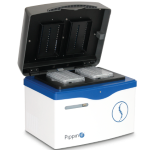
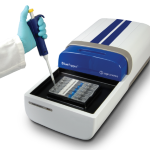
 In the genetics department at Albert Einstein College of Medicine, Research Assistant Professor Alex Maslov is working to understand structural variants associated with aging and cancer. Using human and mouse cells, he deploys whole genome sequencing to make these links. In one current project, his lab is investigating whether chemotherapy causes somatic mutations in non-tumor tissue. For these studies, his team relies on Pippin automated DNA sizing instruments from Sage Science.
Maslov began with Pippin Prep, which he uses primarily for library preparation before Ion Torrent sequencing. “We were extremely happy with it because it’s very precise and reproducible, and doesn’t take much effort,” he says. But between his lab and the core facility led by Shahina Maqbool, demand quickly surpassed the Pippin Prep’s capacity.
That’s when Maslov got his PippinHT. In addition to solving the capacity issue, he says, the PippinHT delivers results more quickly, taking just 20 minutes per run. Reproducibility of sizing is very important to Maslov, who uses split reads to detect structural variants in Ion Torrent data. Any variability between samples changes the sensitivity of structural variant detection and makes results less reliable. “What we like about PippinHT is that it’s extremely reproducible. All 12 samples come out as identical,” he says. “When you do size selection on a gel, you can never do it precisely from one sample to another.”
The PippinHT was installed at the core lab, where it’s used by other scientists for Illumina sequencing, both for DNA and RNA projects. “For RNA library preparation, it’s even more critical,” says Maslov. “They need to distinguish library fragments from adapter-dimers, and in the case of microRNAs, the difference might only be 20 base pairs.”
Bringing in either Pippin instrument is an investment, but Maslov says that ultimately the tools help scientists save money. “With Ion Torrent, if you use fragments that are too small, you’re not getting the full output of sequencing. If you use fragments that are too long, you can lose whole runs,” he says. These kinds of mistakes in size selection can be quite costly, but they can be avoided with precise, automated sizing. “My advice to other scientists is: do not hesitate,” Maslov says. “Pippin works.”
DNA Day Makes Us Feel Like Rock Stars
This year’s DNA Day arrives at a heady time for advances with the world’s most important molecule: scientists have edited DNA in a human zygote for the first time, we’re closer to a fully finished human reference genome than ever before, and the community is making major strides in using DNA to store data.
It’s humbling to be part of a field where transformations are happening so quickly and with such frequency. What’s being accomplished today is truly amazing, especially when we consider that June 2000 saw the White House announcement of the first drafts of the human genome sequence from the Human Genome Project and Celera. Fifteen years ago, telling our friends and family about working in the genomics field was the ultimate conversation-stopper; today, we feel like rock stars when people learn that we’re part of this exciting industry.
DNA Day celebrates both the completion of the draft of the first human genome, published in April 2003, and the seminal paper on the structure of DNA from Watson, Crick, and collaborators in 1953. When we think about how much has been learned about DNA since those first studies, it’s staggering: from epigenetics to CRISPR, from transposable elements to folding properties, we have come so far in such a short period of time. Now biology is entering the realm of big data, and DNA sequencing has led the way.
Of course, there’s still a long way to go. We believe that public education is particularly important; in a recent survey of consumers, the vast majority of respondents said that “any food containing DNA” should be labeled as such. It’s sad that even as we’re making incredible leaps forward in our understanding of DNA, so many people still have little or no education about this molecule and its function in the world. We hope that the community finds new and innovative ways to inform the public as it continues this unprecedented pace of biological discovery.
We wish you and yours a happy DNA Day!
Video Protocol: NGS-based Methylation Mapping with Pippin Prep
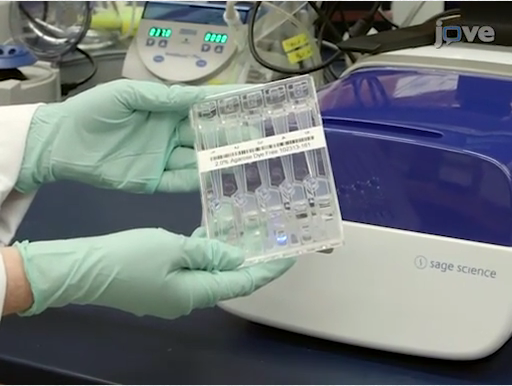 We always love a great protocol video, and this one from scientists at Weill Cornell Medical College, published through the Journal of Visualized Experiments, is a keeper. Check it out here: “Enhanced Reduced Representation Bisulfite Sequencing for Assessment of DNA Methylation at Base Pair Resolution.”
The protocol, which can also be viewed the old-fashioned way here, is an NGS-based approach to map DNA methylation patterns across the genome and was developed as an alternative to microarrays. The Cornell scientists and their collaborator at the University of Michigan present a step-by-step recipe for using a restriction enzyme in combination with bisulfite conversion to achieve base-pair resolution of methylation data. The entire method spans four days.
“Reduced representation of whole genome bisulfite sequencing was developed to detect quantitative base pair resolution cytosine methylation patterns at GC-rich genomic loci,” the scientists report. The data generated “can be easily integrated with a variety of genome-wide platforms.”
In the protocol, the scientists call for automated DNA size selection with Pippin Prep, assuming there’s enough input material to make it possible (25 ng or more). You can watch the process (just past the 4 minute mark in the video) or read about it in section 5.1 of the paper.