
AGBT in Review: Long-Range Data for Better Genome Insight
AGBT is behind us, which means the Sage Science team is officially back to the land of fleece and flannel. We had a great time at the conference and especially enjoyed seeing all the attendees making the most of our selfie sticks on the dance floor at the closing party!
The final AGBT sessions were every bit as interesting as the rest of the meeting. Nick Loman’s talk describing the use of Oxford Nanopore MinIONs during the recent Ebola epidemic in West Africa was an amazing glimpse of the kind of field-based sequencing we’ve dreamed of for a long time. His observation that the weak link in the system was the need for a constant Internet connection (required for the sequencer’s base-calling software) underscores the basic logistical challenges we face in achieving our ultimate goal of being able to sequence anything, anywhere, anytime.
The presentation from HudsonAlpha’s Shawn Levy continued the trend of 10x Genomics data, one of the major themes of this year’s AGBT. His emphasis on the importance of phasing and of finding complex events and structural variants mirrors a growing recognition in the community that short-read data will have to be supplemented by other data sources — be it long-read sequencing, Hi-C data, synthetic long reads, genome maps, or something else — for maximum benefit. Dovetail Genomics, which uses a Hi-C approach, was mentioned in several talks at the conference and really seems to be gathering steam in the field.
Normally we’d have a whole year to rest up for the next AGBT, but this September the organization will host its inaugural precision health meeting. We’re eager to see the speaker list and agenda, and maybe even get to experience the Scottsdale, Ariz., meeting in person!
AGBT: The All-Nighter Parties Haven’t Broken Us Yet
 We may be a little bleary-eyed, but so far we’re surviving the Super Bowl of genomics, better known as AGBT. Last night we had a blast co-sponsoring a party out on the golf course with PacBio, and we’re glad so many people came out to eat, drink, and mingle.
The quality of scientific talks alone is enough to distinguish AGBT from other genomics conferences; this year’s slate of presentations has been no exception. We enjoyed Matt Sullivan’s talk in the opening plenary session and were delighted to see that he’s still using that carefully honed NGS pipeline for low-input samples in his new lab at Ohio State.
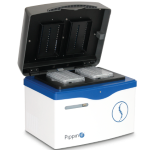
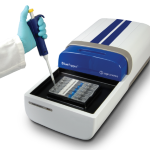
In a talk from the Joint Genome Institute’s Ji Lee, attendees got a nice glimpse of Oxford Nanopore’s sequencing technology in a mini-metagenomics experiment. Lee said her team regularly gets about 500 Mb of 2D sequence per flow cell and that low-input samples have provided sufficient yield for sequencing. They modified the library prep method, adding size selection with BluePippin or PippinHT after shearing to generate 20 Kb libraries — a significant boost from the median read lengths they were achieving before.
We also enjoyed the PacBio workshop yesterday, where scientists shared a number of great projects for which SMRT Sequencing had made a considerable difference in assembly quality. The event focused on human biomedical sequencing applications, so we heard some really nice examples of how long-read sequencing has provided insights for infectious disease, cancer, drug metabolism profiles, and even induced pluripotent stem cells. PacBio users have been deploying many of our automated DNA size selection tools to achieve higher average read lengths for years now, and it’s great to see these ultra-long reads making such a difference.
And now it’s back to the conference. One more day of sessions, and then we can go home and sleep for three straight days!
All Aboard for AGBT!
We can’t wait for the annual Advances in Genome Biology and Technology conference next week, but we have to keep reminding ourselves not to go on autopilot this year. For the first time since the conference began in 2000, AGBT won’t be taking place in Marco Island — this year we’re heading to sunny Orlando and wondering how many attendees will sneak out for a spin on the local Quidditch pitch.
This year’s event promises the usual great talks from highly respected scientists, with names like Sean Eddy, Harold Varmus, David Haussler, and Debbie Nickerson dotting the agenda. We’re particularly looking forward to a talk from Matthew Sullivan in the opening session; he conducted a pivotal study on DNA size selection a couple of years ago that helped demonstrate the importance of sizing in the NGS workflow. Sullivan studies viral populations in the ocean and will no doubt have a really interesting story to share with AGBT attendees. We’re also eager to hear from Katia Sol-Church on day two of the conference. Sol-Church, a leader in the core lab community, will be speaking about the clinical work her lab has gotten involved in.
The Sage team will be glued to the sessions but eager to meet old friends and old-friends-to-be at the many networking events. We’ll also be co-sponsoring a party with PacBio on Friday evening at the golf course (the Fairway Lawn, in Marriott lingo). Join us for some drinks, swag, and a great time!
ChIA-PET Study Demonstrates Effect of Genome Folding on Gene Expression
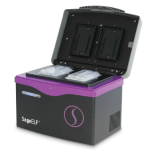
For a recent publication in Cell, scientists used the SageELF whole-sample fractionation platform to perform size selection prior to cDNA sequencing on the PacBio system. The Iso-Seq method allows PacBio users to generate full-length transcripts, and SageELF makes it easier to pool size fractions and include the exact size range of interest for the study.
In this paper, “CTCF-Mediated Human 3D Genome Architecture Reveals Chromatin Topology for Transcription,” the PacBio data set complemented short-read sequence data. Lead authors Zhonghui Tang, Oscar Junhong Luo, and Xingwang Li, along with senior author Yijun Ruan, worked with collaborators at the Jackson Lab and several other institutes to better understand genome organization and its implications for transcription.
The scientists used ChIA-PET (a much-needed abbreviation for “chromatin interaction analysis by paired-end tag sequencing”) to perform 3D mapping of the genome in four types of human cells, focusing on interactions mediated by transcription catalyst RNAPII and CTCF, which is known to play a role in genome folding. Separately, they studied gene expression with long-read sequencing.
“We find that CTCF/cohesin-mediated interaction anchors serve as structural foci for spatial organization of constitutive genes concordant with CTCF-motif orientation,” the authors report, “whereas RNAPII interacts within these structures by selectively drawing cell-type-specific genes toward CTCF foci for coordinated transcription.” They also show that changes in haplotype or allele interactions affect chromosomal configuration and alter gene expression.
This PAG Was One for the Birds (and Other Organisms, Too)
The 24th annual PAG meeting ended earlier this week, and we thoroughly enjoyed ourselves — as did just about every other attendee we encountered. The avian genomics community one-upped everyone else by going on bird-watching excursions and tweeting photos of their finds along with challenges to identify each species. (The Sage team was stumped!) Erich Jarvis’s great plenary talk on the neural circuits involved in vocal learning also put our feathered friends in the spotlight and had scientists atwitter with new research ideas.
We really enjoyed the Hi-C talk from Erez Lieberman Aiden from Baylor College of Medicine. He walked attendees through his hypothesis that DNA loops form by extrusion rather than diffusion, stopping at the CTCF motif in a certain direction. The analysis of 3D formation and folding of DNA has inspired scientists around the world to use this technique to better understand how proximity in space, rather than in linear sequence, affects gene expression.
The Sage team attended several excellent talks, but lots of attendee interest kept us at our booth most of the time. We loved hearing about the incredibly creative research going in on so many model organism communities, and it was terrific to see how many projects could benefit from automated DNA size selection. (If you didn’t get a chance to talk to a Sage member at PAG, please check out our SageELF and BluePippin pages to learn more about two of the instruments we offer for NGS users.)
Also, don’t forget that there’s still time to enter the new SMRT Grant program we’re co-sponsoring with PacBio. Tell us what makes your favorite organism’s genome so interesting, and the lucky winner will get a genome sequence on the house.