
For Low-Input DNA Work, Scientists Recommend Pippin for Best Size Selection
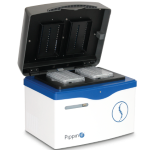
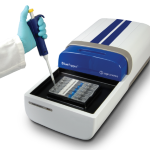
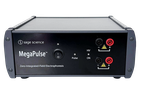
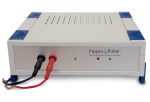
Scientists at the University of Arizona, led by senior author and newly named Moore Foundation Investigator Matthew Sullivan, have published details of how to optimize sample prep methods for next-gen sequencing projects in which input DNA is negligible. As part of that work, the authors recommend the Pippin platform from Sage Science as the superior technology for automated size selection of libraries.
The paper, “Towards quantitative metagenomics of wild viruses and other ultra-low concentration DNA samples: a rigorous assessment and optimization of the linker amplification method,” from Duhaime et al., was published in September 2012 in Environmental Microbiology and is available via open access. The work focused on ways to reduce amplification bias, including precise DNA size selection, enzyme choice, and optimizing cycle number.
Sullivan and his team are using these methods for ocean-based viral metagenomics projects, but the methods translate to other projects that have very little DNA available. In this work, they looked at size selection in particular as a way to control size-related bias in the amplification step of sample preparation.
The paper reports on a comparison of Pippin to Solid Phase Reversible Immobilization (SPRI) from Beckman Coulter Genomics and to manual gels. The authors write:
“Of the three sizing fractionation methods tested for target recovery efficiency (fraction recovered DNA in target 400–600 bp size range), throughput (ease of applicability to numerous samples simultaneously), and risk of cross-sample contamination, Pippin Prep, an automated optical electrophoretic system that does not require gel extraction, was the most efficient and reproducible (94–96% of input DNA), with the tightest, most specific sizing.”
They note that SPRI was also high-throughput with low risk of contamination, but was the least efficient in recovery of the three methods tested, yielding 46-50 percent of the targeted size fraction after shearing.
“Based on this comparative analysis, we recommend the Pippin Prep automated electrophoretic system to prepare samples for [next-gen sequencing] libraries,” they conclude.
To learn more, read our case study here.
Crop Science Collaboration Uses Next-Gen Sequencing with Pippin Prep
A collaboration among scientists at Monsanto and Bayer Crop Science has demonstrated the use of next-generation sequencing and a new bioinformatics method for analyzing the genome sequence of crops that have been genetically modified.
Lead authors David Kovalic and Carl Garnaat published their findings in The Plant Genome journal in a paper entitled “The Use of NexGen Sequencing and Junction Sequence Analysis Bioinformatics to Achieve Molecular Characterization of Crops Improved Through Modern Biotechnology.” You can view the full text here [PDF].
The goal of the project was to evaluate the use of next-gen sequencing compared to Southern blots and targeted sequencing of PCR products, the current standard for providing a molecular characterization of GM crops for both internal research and regulatory approval. The team studied strains of soybeans, both modified and wild type, using the Illumina platform to generate more than 75x coverage. During sample prep, they used the Pippin Prep from Sage Science to select a library with an average insert size of 280 base pairs.
As they write in the introduction:
“The overall strategy for this new molecular characterization method is to produce DNA sequence fragments that comprehensively cover the entire genome of test and control plants (i.e., the GM event under investigation, and the parent line from which it was derived) and use bioinformatic tools to analyze these DNA fragments. These bioinformatic analyses establish the insert/copy number and the presence/absence of backbone sequences.”
On the analysis front, the team developed a new bioinformatics approach called Junction Sequence Analysis to detect and characterize “novel chimeric sequences resulting from insertions into the native genome,” the authors report. In their assessment of the results, they add that “the method presented is capable of detecting complex events including those with multiple T-DNAs and sequence rearrangements.”
The scientists conclude that next-gen sequencing paired with Junction Sequence Analysis offers results equivalent to those from Southern blots — with the added advantages of “the simplicity, efficiency and consistency of the method,” they report, noting that their sequencing and analysis pipeline “provides a viable alternative for efficiently and robustly achieving molecular characterization of GM crops.”
At ASHG, Interest Soars for Advances in Sequencing Technologies
We were thrilled to escape the apocalyptic weather of the northeast for a few days to attend the American Society of Human Genetics annual meeting in San Francisco. It’s one of our favorite meetings, and with nearly 7,000 scientists registered, this year’s event is living up to its reputation as one of the most important conferences in the genomics field.
Sequencing vendors — and vendors-to-be — have really stolen the spotlight at ASHG this week. As usual, there’s plenty of buzz around Illumina, which just announced the winners of a MiSeq grant program. Awardees from the Bigelow Laboratory for Ocean Sciences, La Trobe University, and the Texas Biomedical Research Institute will receive the MiSeq instrument, reagent kits, analysis software, and more. As an exhibitor at several of the recent Illumina user group meetings, we can certainly attest to the community’s high interest in MiSeq and other Illumina sequencing platforms.
Life Technologies has been getting lots of attention here at ASHG as well. With its Ion Proton in labs and new applications available, such as the just-announced AmpliSeq Community Panels for the Ion platform, people are eager to learn more about this technology. When we attended Ion World in September, it was great to see so much diversity in how the tool is being used by scientists. It’s a really interesting platform and we look forward to hearing what else Life Tech has in store.
Of course, the big news at ASHG comes from a company that doesn’t yet have a sequencer on the market: Oxford Nanopore Technologies. The UK-based vendor has a booth across the exhibit hall from ours in which they’ve unveiled their nanopore-based GridION and MinION sequencers. Still no word on when the company will be taking orders, but it sounds like Oxford will be working with early access customers soon; the company has said it will begin commercialization by the end of this year. As expected, people have been flocking to the Oxford booth to get a glimpse of the new tech.
As a participant in the next-gen sequencing field, we’re pleased that so much progress is happening on many different fronts. Our customers currently using the Pippin platform for Illumina and Ion Torrent sequencing technologies are continually demonstrating new applications enabled by precise size selection, including massively parallel genotyping, splice variant detection, microRNA analysis, and more.
At this conference, what’s really resonating for us is the message we’ve been hearing a lot from customers lately: with sequencing technology changing so fast, they need sample prep solutions that not only work now, but also will work with sequencers launching in the future too. Pippin users frequently tell us that the flexibility of our platform allows them to tune it to a number of different sequencer specifications, so it will be just as useful with long-insert sequencing like Oxford Nanopore’s as it is today with MiSeq and Ion. We can’t do anything about how rapidly technologies are changing, but we’re glad that we can keep one piece of the puzzle constant.
Cell Paper Offers New Understanding of Myc Mechanism in Cancer
A big paper came out of Richard Young’s lab at the Whitehead Institute last month in Cell describing the mechanism through which the c-Myc transcription factor causes elevated expression in tumor cells. We were happy to see that the Pippin Prep from Sage Science was used with the ChIP DNA prior to sequencing on Illumina.
The paper is important because high levels of c-Myc have long been known to correlate to poor clinical outcomes for cancer patients, but the biology behind this connection was not understood. In general, the scientific community had theorized that these effects involved “newly activated or repressed ‘Myc target genes,’” the authors write.
Instead, what they found in this study is that in cancer cells with elevated levels of c-Myc, “the transcription factor accumulates in the promoter regions of active genes and causes transcriptional amplification, producing increased levels of transcripts within the cell’s gene expression program,” the authors report. “Thus, rather than binding and regulating a new set of genes, c-Myc amplifies the output of the existing gene expression program.” Because the gene expression of tumor cells is so high, these cells are able to escape natural biological mechanisms that would normally find and kill malignant cells.
Check out “Transcriptional Amplification in Tumor Cells with Elevated c-Myc” for more.
Cell Paper Reports Massive Genome Study for Lung Cancer
A paper that came out last month in Cell describes a massive effort to generate the exome and/or genome sequences of 183 tumor/normal pairs for people with a specific type of lung cancer. Authors hailed from Harvard University, New York University, the University of Cologne, MIT, and many other institutions.
Through this major collaboration to examine lung adenocarcinoma, for which affected patients have a five-year survival rate of about 15 percent, scientists “identified novel mutated genes with statistical evidence of selection and that likely contribute to pathogenesis,” they write in the paper. The genes implicated in lung adenocarcinoma from this study corroborate earlier links between this disease and many of the genes. By grouping variants together, the study also found signatures that correlate with a patient’s history of smoking as well as alterations of genes linked to the cancer.
In addition to the biological advance in understanding this disease, the authors suggest that this may have relevance downstream as well. “The candidate genes identified in this study are attractive targets for biological characterization and therapeutic targeting of lung adenocarcinoma,” they write.
We were proud to see that this work included using our Pippin Prep platform for size selection. It’s wonderful to have our technology contributing to a study of this magnitude, and one that could ultimately help prevent some of the 500,000 deaths that occur globally each year due to lung adenocarcinoma.
Link to: Mapping the Hallmarks of Lung Adenocarcinoma with Massively Parallel Sequencing. Cell 150, 1107–1120, September 14, 2012.